


Cutting for Color vs. Cutting for White: The High-Stakes Art of Fancy Color Diamonds

When most people picture diamond cutting, they imagine the classic brilliant cut—a precise geometric arrangement engineered to bounce light out through the top of the stone to create maximum white sparkle. For traditional colorless diamonds, brilliance and fire are the entire goal. But when working with fancy color diamonds, the rulebook is completely inverted.
Cutting a natural color diamond is one of the highest-stakes challenges in gemology. Where white diamond cutters aim to eliminate light traps that reveal color, color diamond cutters intentionally construct light traps inside the stone to deepen its natural hue.
1. The Core Objective: Light Return vs. Color Trapping
- White Diamonds (Eliminating Shadow & Color): The goal with a colorless diamond is ideal light return. Facets are angled so light enters the crown, hits the pavilion mirrors, and bounces straight back out to the viewer's eye. Allowing light to linger or bounce multiple times inside the stone creates dark areas and accentuates unwanted yellow or brown undertones, lowering the stone's grade on the D–Z scale.
- Fancy Color Diamonds (Maximizing Depth of Hue): Cutters want light rays to travel as far as possible through the crystal lattice before escaping. The longer a ray of light bounces inside the diamond, the more color wavelengths are absorbed by the crystal's natural trace elements (like nitrogen for yellow or boron for blue). This optical path length directly dictates whether a stone lands as a Fancy Light, Fancy, or Fancy Intense.
2. Why Shape Selection Makes or Breaks Color
Because different outline geometries bounce light in vastly different ways, shape selection in fancy color diamonds is purely functional rather than decorative.
The High-Yield Shapes (Why Radiants & Cushions Dominate)
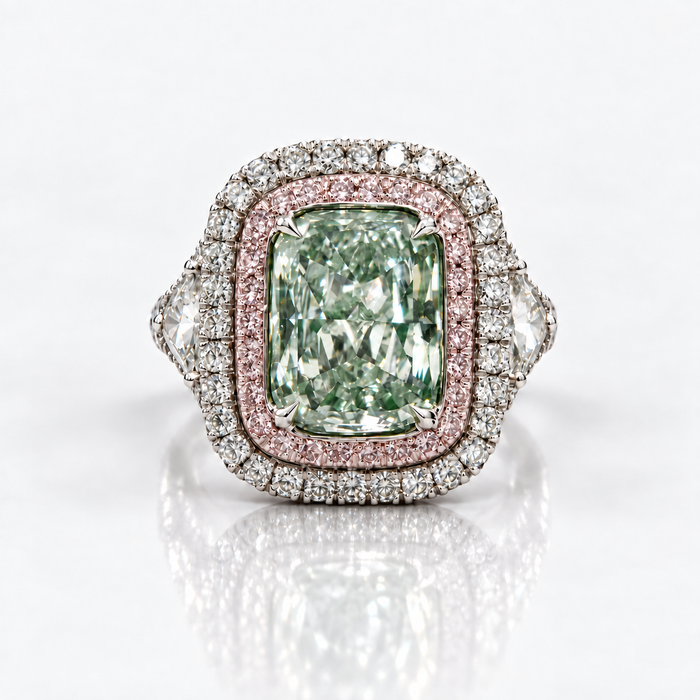
Rough fancy color diamonds are overwhelmingly fashioned into modified fancy shapes—specifically Radiant and Cushion cuts.
- Radiant Cuts: Invented specifically to blend the elegant outline of an emerald cut with the brilliance of a round, the radiant cut’s internal facet arrangements act like a hall of mirrors. The scissors-style and triangular pavilion facets bounce light criss-cross through the center, concentrating the hue and driving it directly up to the table.
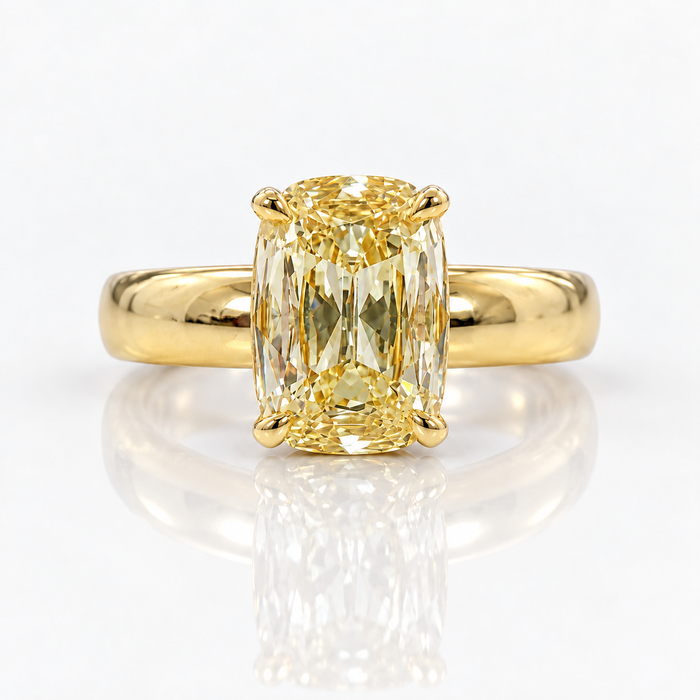
- Cushion Cuts: With their deep pavilions, steep crown angles, and soft corners, cushions allow cutters to retain maximum rough weight while building a tall "light chamber" inside the stone. Modified cushion cuts (like "crushed ice" facet arrangements) scatter light internally, making subtle body color appear much richer face-up.
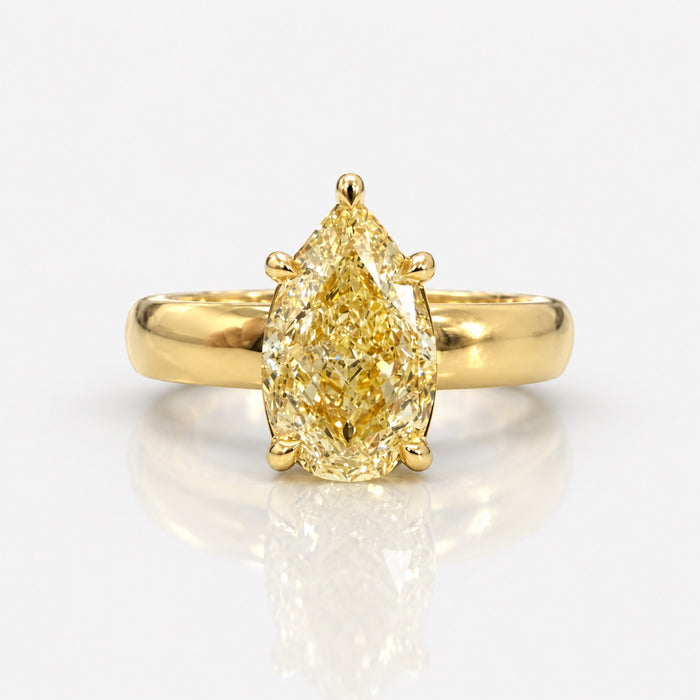
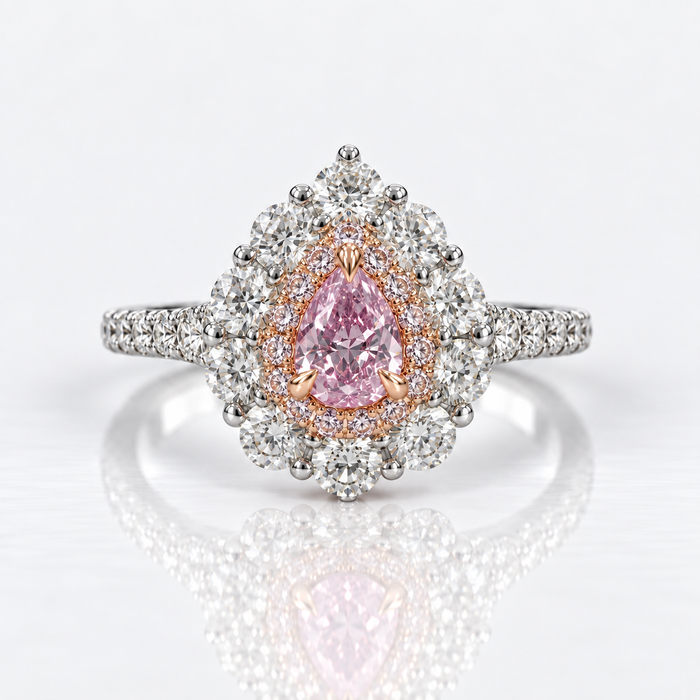
- Pears & Ovals: These shapes feature elongated body ratios and pointed or rounded ends that naturally trap light near the tips, allowing cutters to cluster saturation in key zones.
The Unforgiving Shapes (Why Rounds & Emerald Cuts Are Ultra-Rare)

Certain shapes are notoriously difficult—or financially risky—to attempt with fancy color rough.
- Round Brilliants (The Color Dissolver): The round brilliant cut was engineered mathematically by Marcel Tolkowsky to expel light as quickly and intensely as possible. Because it bounces light out in direct, short paths, it flushes out color. Cutting a fancy yellow or pink rough into a round brilliant will often cause the stone to drop a full intensity grade (e.g., from Fancy Yellow down to Fancy Light Yellow). To achieve a true Fancy Intense or Vivid grade in a round shape, the rough must possess extraordinary, rare natural saturation to overcome the cut's light-dispersing geometry.
- Emerald & Asscher Cuts (The Step-Cut Transparency): Step cuts consist of broad, flat, parallel facets that function like clear windows rather than light-reflecting mirrors. Because light passes straight through without bouncing internally, step cuts showcase a diamond’s natural clarity, not its color concentration. A fancy color diamond cut into an emerald shape requires pure, uniform color throughout the raw crystal, as there is zero optical trickery to enhance the face-up hue.
3. The Stakes: Orienting the Rough & Preserving Weight
Natural fancy color rough is exceptionally rare and exponentially more expensive per carat than white rough. A single fraction of a millimeter off on the polishing wheel can cost hundreds of thousands of dollars in lost saturation grade.
- Mapping Color Zones: Color in natural diamond crystals is rarely distributed evenly; it frequently occurs in distinct bands or localized zones. A master cutter must map the rough under magnification and orient the stone so that the concentrated color zone sits directly at the culet (the bottom point). This ensures that every light ray entering the top of the ring travels through that concentrated color pocket before reflecting upward across the entire face of the diamond.
- Proportion vs. Saturation: While a white diamond cutter will readily shave off weight to achieve a target depth percentage or an "Excellent" cut symmetry grade, a fancy color cutter will intentionally keep a pavilion deep or alter facet angles to push the stone into a higher GIA color classification.
Summary: Two Opposite Crafts
| Feature | White Diamonds | Fancy Color Diamonds |
|---|---|---|
| Primary Goal | Maximize brilliance, fire, & light return | Maximize internal light travel & color intensity |
| Preferred Shapes | Round Brilliant, Oval, Emerald, Princess | Radiant, Modified Cushion, Pear, Fancy Ovals |
| Challenging Shapes | Marquise, Trilliant (due to bow-ties/light leakage) | Round Brilliant, Emerald/Asscher (disperses or passes light straight through) |
| Facet Strategy | Standardized mathematical formulas | Custom facet patterns adapted to individual rough geometry |
| Weight Philosophy | Sacrifices weight for ideal cut proportions | Sacrifices standard proportions to retain carat weight and deepen color |


Leave a comment